
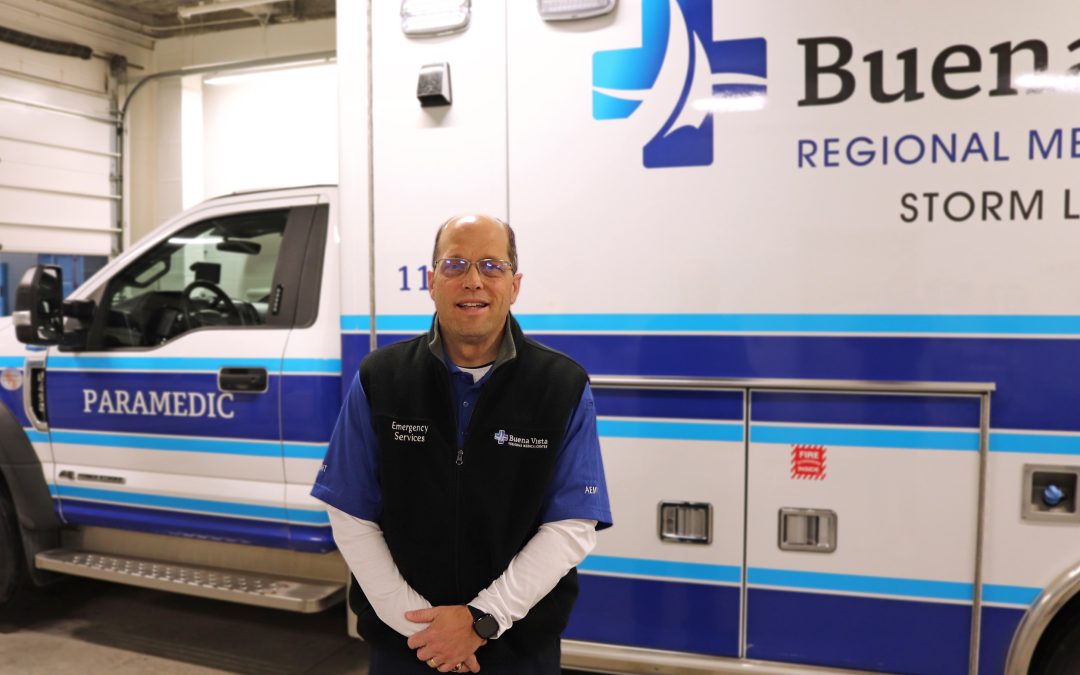
For Dave Patton, BVRMC advanced emergency medical technician (AEMT), saving lives does not stop when he leaves the hospital. For more than 35 years, Patton has been a dedicated blood donor, most recently reaching a 15-gallon blood donor milestone with LifeServe Blood Center.
During National Blood Donor month in January, Patton hopes to encourage others to become blood donors and help potentially save lives.
“Especially in the field that I work in, it encourages me to donate because I know I’m helping somebody,” says Patton. “Donating blood could help the trauma patients we see, as well as cancer patients, surgical patients or others.”
Patton first donated blood with American Red Cross in 1990 while attending Iowa State University as part of a class service project. Since then, he has continued to be a regular blood donor.
“It takes a matter of minutes to hopefully help save others’ lives,” says Patton when describing how quick and easy it is to donate blood. “Fifteen to 20 minutes, every eight weeks, or however often you choose to donate, can help someone in the long run.”
About one pint of blood is collected each time a person donates. Blood donors can donate whole blood every 56 days, up to six times a year. It has taken Patton about 20 years of dedicated blood donations with LifeServe Blood Center to reach 15 gallons donated.
LifeServe Blood Center is a non-profit, community-based blood center that provides blood and blood products to 175 hospitals in Iowa, Nebraska, South Dakota and Illinois, including Buena Vista Regional Medical Center.
“There’s been times when I’ve been working in the ER and see the LifeServe vehicle come to BVRMC,” says Patton. “Seeing it come back into our lab knowing it will be there in someone’s time of need is a great thing.”
According to the National Institute of Health, one blood donation can save up to three lives. With 15 gallons of donated blood, Patton has potentially helped save approximately 360 lives.
“Just try it at least one time and see if it’s something for you,” says Patton when encouraging others to donate blood. “There is always a need for donors.” To learn more about how you can help save lives by becoming a blood donor, visit LifeServeBloodCenter.org.